
News
-
February 11, 2024 - Detroit Academic Games team is preparing for its own 'Super' event in Ypsilanti (Detroit Free Press)
About Us
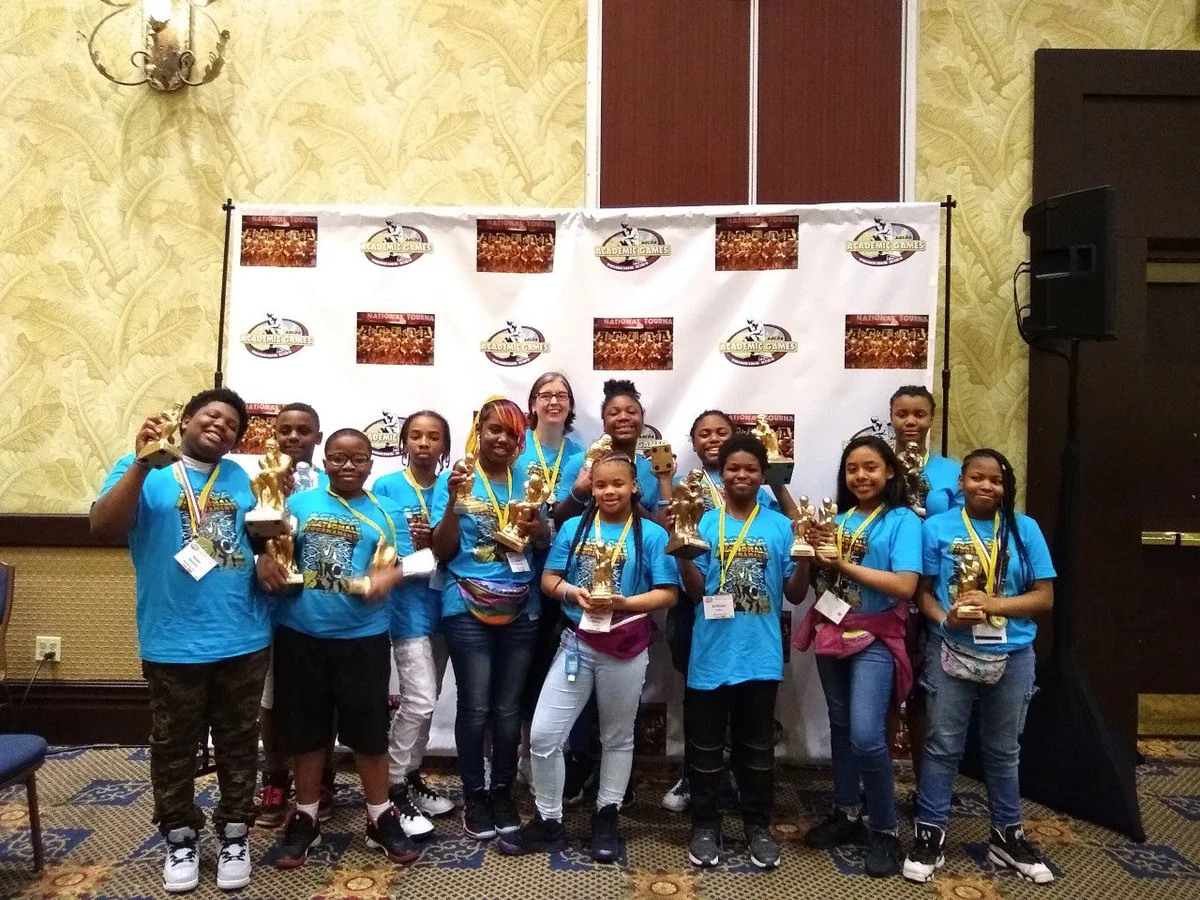
Academic Games is a series of games designed to stimulate and test student knowledge in a variety of subjects. Students develop proficiency and confidence by competing in games of Math, English, Social Studies, and Logic. Through competition, students are encouraged and motivated to sharpen their skills in order to gain a competitive edge over their peers. Academic Games makes learning fun!
Schedule
September 23 – regional sites
October 21 – regional sites
November 18 – regional sites
December 2 – Reading Game Extravaganza at Booker T. Dozier Recreation Center
December 9 – regional sites
December 10 1 PM - Super Tournament Informational Meeting at the Booker T. Dozier Recreation Center
January 20 – regional sites (optional for schools due to weather)
February 3 – Showcase Tournament Hillside Middle School (LinguiSHTIK), MacKenzie Elementary-Middle School (WFF N' Proof), UPAD Middle School (Presidents/Propaganda), or Detroit Bunche Academy (On-Sets/On-Words)
March 7-9 – State Tournament at the Ann Arbor Marriott Ypsilanti at Eagle Crest for minor/elementary (grades 6 and below)
March 14-16 – State Tournament at the Ann Arbor Marriott Ypsilanti at Eagle Crest for middle/high school (grades 7 to 12)
April 19-22 – National Tournament at the Hyatt Regency in Atlanta, GA